Veterans, States, and the Long Memory of Empires
The Present Debate in the United States
On 11 March 2026, The New York Times reported that the U.S. administration had launched a new initiative allowing government lawyers working with the United States Department of Veterans Affairs and the United States Department of Justice to initiate guardianship proceedings for vulnerable veterans, particularly those suffering from severe mental illness, addiction, or cognitive impairment and who lack family members able to make decisions for them.
Under the proposal, courts could appoint legal guardians responsible for medical decisions, housing arrangements and sometimes financial matters for veterans considered unable to care for themselves. Supporters present the measure as a humanitarian response to individuals whose illness or trauma prevents them from managing their lives independently. Critics warn that the initiative raises civil-liberties concerns and risks reopening the door to forms of involuntary institutional care that democratic societies have spent decades trying to reform.
The debate unfolds against a stark reality. In the United States today roughly 33,000 veterans are homeless, and about 14,000 of them live directly on the streets. Behind those numbers lie men and women who once served the state in uniform and who now exist at the margins of the very society they defended.
The policy question therefore touches something much deeper than a technical reform of guardianship law. It raises a question that has accompanied every organized state for thousands of years: what does a political community owe the soldiers who once fought its wars?
Vietnam and the Crisis of the Citizen Soldier
The modern American veteran dilemma cannot be understood without the experience of the Vietnam War. During the height of that conflict the United States relied on mandatory military service. Millions of young men were drafted into the armed forces. Military service was not voluntary; it was a legal obligation. Only those who managed to secure exemptions — often through university deferments or other privileges — avoided the draft.
This produced a particular kind of army: a citizen army. Students, mechanics, teachers, farmers and clerks were suddenly transformed into soldiers and sent across the Pacific. When their service ended they were expected to step back into civilian life, often after experiences for which neither they nor their society were prepared.
When those soldiers returned from Vietnam they encountered a country deeply divided about the war itself. Some veterans faced hostility or indifference, others returned carrying psychological wounds that would only later be recognized as post-traumatic stress disorder. The state gradually expanded its support structures, building the modern system of hospitals, benefits and rehabilitation programs managed by the Department of Veterans Affairs.
At the same time the political legitimacy of conscription collapsed. In 1973, the United States abandoned the draft and adopted an all-volunteer professional military. War would henceforth be fought by a smaller and more specialized segment of society.
Today fewer than one percent of Americans serve in uniform. The majority of citizens experience war indirectly, through news reports and distant policy debates. Yet the question of reintegration has never disappeared. Even in a country that operates one of the largest veteran welfare systems in the world, thousands of former soldiers continue to fall into homelessness, addiction or untreated mental illness.
Rome and the Veteran Colony
Two thousand years earlier the Roman world faced a similar dilemma, though under very different political conditions. During the late Roman Republic the army gradually evolved from a seasonal militia of citizen farmers into a professional military force whose soldiers served for long periods and depended on the state for rewards at the end of their service.
This transformation created enormous political tension. Soldiers often became loyal to their generals rather than to the state itself, a dynamic that helped trigger the civil wars that destroyed the Republic. When Augustus emerged victorious and established the Roman Empire, he understood that thousands of experienced veterans could become a destabilizing force if they were simply discharged without support.
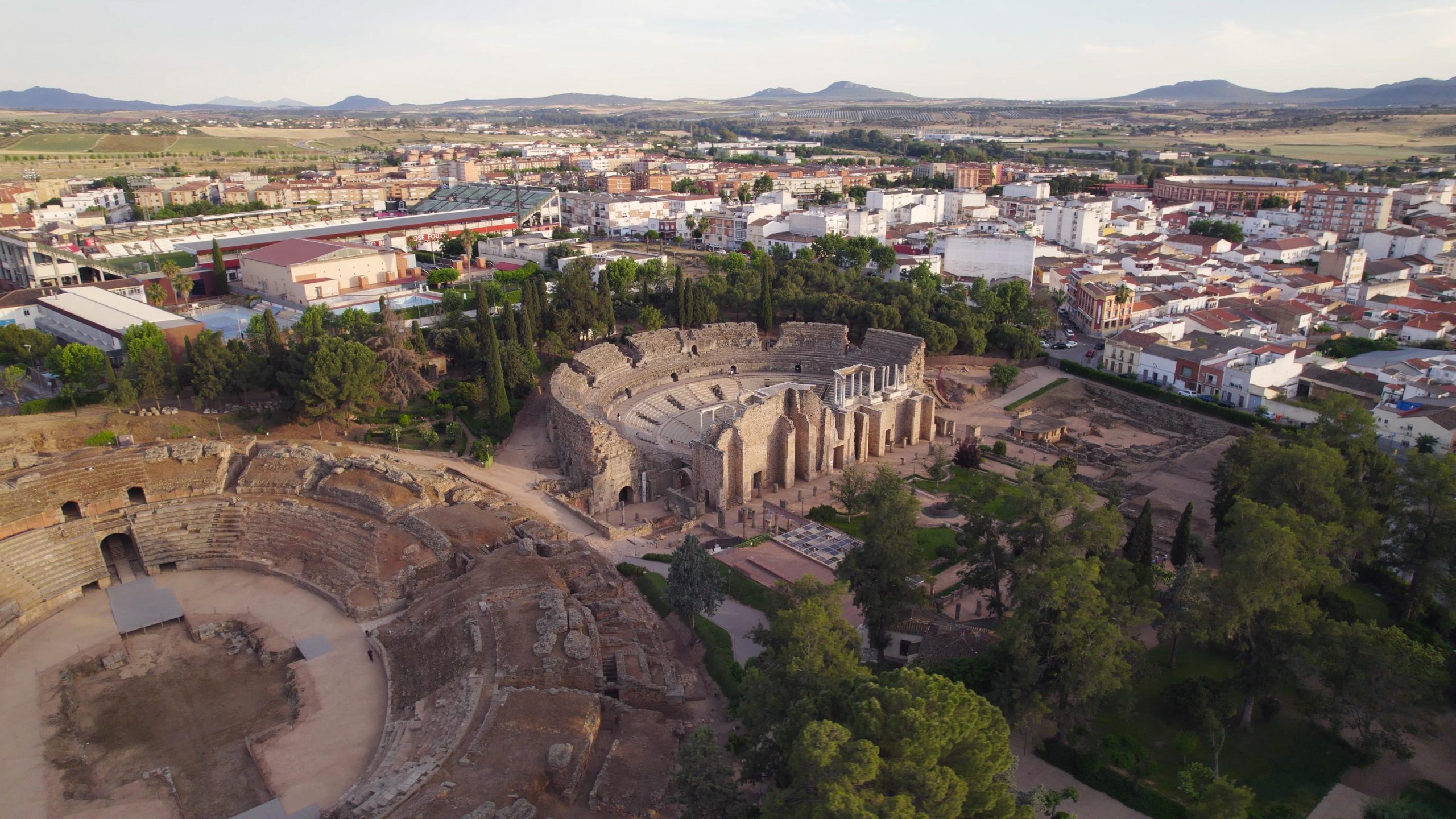
His solution was both pragmatic and visionary. Beginning in 25 BCE, veterans were settled across the empire in newly founded colonies and granted land, privileges and full civic status. One of the most remarkable examples lies in the Iberian Peninsula: Augusta Emerita, today’s city of Mérida in Spain. The colony was established for retired soldiers of the legions V Alaudae and X Gemina. Its very name reveals the intention. Emerita derives from emeriti, the soldiers who had completed their service.
These veterans did not return to society as dependents of the state. They became farmers, magistrates, builders and administrators. Their settlements anchored Roman power in newly conquered territories while simultaneously rewarding those who had defended the empire.
Augusta Emerita was only one example of a vast system. Veteran colonies appeared across the Roman world, including Colonia Claudia Ara Agrippinensium (modern Cologne), Colonia Patricia in Córdoba, and Arelate in southern Gaul. Each colony functioned as a living extension of Roman order. Veterans brought Roman law, language, infrastructure and agricultural practice with them. Entire cities grew from the retirement of soldiers.
Rome’s answer to the veteran question was therefore territorial and civic. A soldier returned not as a burden on the state but as a founder of society itself.
Egypt and the Language of Order
If we move further back into antiquity, ancient Egypt offers a third model that reflects a very different political philosophy. Egyptian armies, especially during the New Kingdom under rulers such as Ramesses II, consisted largely of professional soldiers, hereditary military families and foreign auxiliaries recruited from regions such as Nubia and Libya.
Veterans could receive land grants, gifts of gold or cattle and positions within the administrative and temple networks that structured Egyptian society. Many became overseers, guards or officials connected to the vast temple estates that functioned as economic and social centers throughout the Nile Valley.
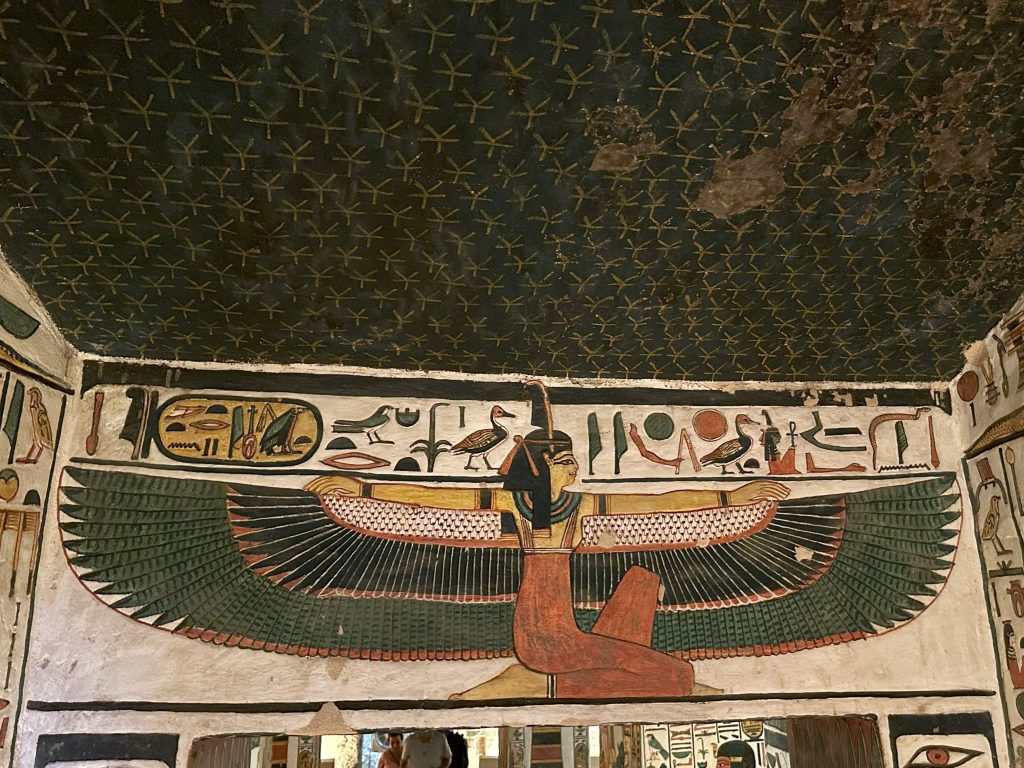
Yet Egyptian civilization interpreted war through a conceptual framework quite different from that of Rome. In the Egyptian worldview the ultimate goal of kingship was not conquest but order.
Because Egyptian ideology celebrated order, temples and kings, not war.
Military victories were carved into temple walls and monumental inscriptions, yet these scenes were never meant simply as celebrations of violence. The king appeared striking enemies not merely as a conqueror but as the guardian of cosmic balance.
War itself was framed as the restoration of Maat — cosmic order. Maat represented harmony, justice and equilibrium in the universe. When foreign enemies threatened the borders of Egypt, the king’s campaigns were portrayed as acts that restored that balance. Even warfare therefore appeared in Egyptian ideology as a temporary disturbance corrected by royal authority.
In that worldview soldiers ultimately served the preservation of order rather than the glory of battle.
Three Civilisations, Three Images
Across these three civilizations we see three very different answers to the same enduring problem.
Rome rewarded its veterans with land and turned them into founders of cities, embedding them directly into the territorial structure of the empire. Egypt rewarded soldiers with land, gifts and positions within institutions that preserved a civilisation built around cosmic order.
Modern America has built an immense administrative system of hospitals, pensions and benefits designed to support those who have served. Yet the social distance created by a professional volunteer army means that the lives of soldiers often unfold far from the daily experience of the society they defend.
The contrast leaves a powerful image across time.
Rome gave veterans land and turned them into founders of cities.
Egypt gave soldiers land and privileges within a civilisation devoted to order.
The United States fields one of the most powerful professional armies in history — yet some of those soldiers return home to homelessness, sleeping in tents under highway bridges, in temporary shelters, or on sidewalks in the very cities whose freedoms they once defended.
Empires always know how to mobilize armies. The harder question — the one that reveals the deeper architecture of a society — is what happens when those soldiers come home.
Like the king’s wife in the old Spanish proverb, an empire must not only be one — it must also appear and act like one.