Cities Remember What Maps Forget
History sometimes reveals itself more clearly in cities than in maps. Maps show borders, treaties and declarations. Cities remember how people actually lived.
I spent beautiful years in Baghdad. Today I live in Egypt. Between these two places one can still sense the outline of a Middle East that once functioned very differently from the one that dominates today’s headlines. The streets, the markets, the mixture of languages and traditions still carry traces of a world in which communities were intertwined rather than permanently mobilized against one another.
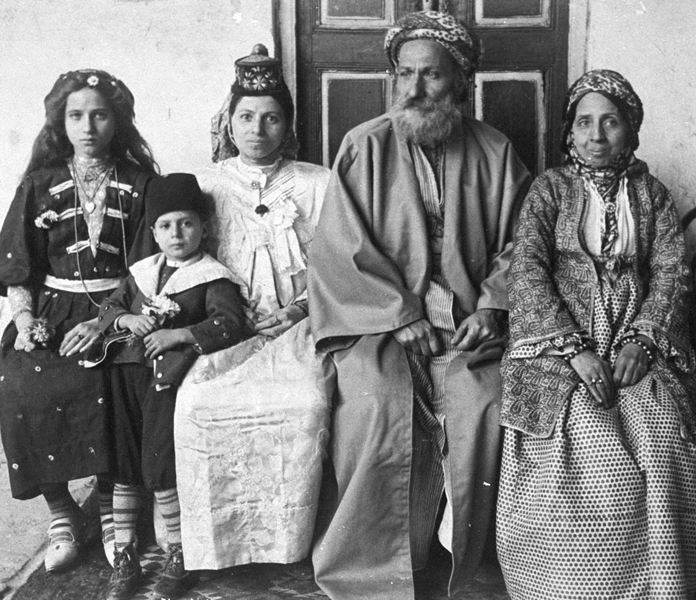
In 1914, on the eve of the First World War, most of the region from Egypt to Iraq still belonged to the Ottoman imperial system. It was not yet a landscape of modern nation-states but of provinces, trade routes and historic cities whose social life had evolved over centuries. Jews, Muslims and Christians lived alongside one another in many urban centers, sharing language, commerce and everyday life. Differences certainly existed, as they do in every society, but they did not define politics in the way they often do today.
Baghdad illustrates this clearly. For centuries it had been one of the most important Jewish centers in the world. Arabic-speaking Jews were deeply integrated into the cultural and commercial life of the city. Similar patterns could be seen in Cairo, Damascus, Aleppo and many other cities of the region. The Middle East was not a utopia, but plural coexistence was a social habit rather than an exception.
The War That Opened the Map
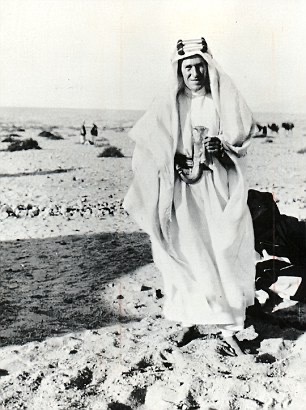
The fracture began with the collapse of the Ottoman order during the First World War. As the empire weakened, the region became an object of strategic planning for external powers. Wartime diplomacy produced promises that could not easily coexist.
Arab leaders were encouraged to believe that independence would follow if they revolted against the Ottomans. At the same time Britain issued the Balfour Declaration in 1917 supporting the creation of a “national home for the Jewish people” in Palestine.
Palestine thus became the place where a European political project intersected with imperial administration and local society. What had once been a province within a larger imperial framework was transformed into a territory where two national aspirations were expected to develop under the supervision of a colonial authority. From that moment onward the political equilibrium of the region was profoundly disturbed.
1919: The Treaties That Reshaped the Region
The year 1919 marked the diplomatic turning point in which the future of the Middle East began to be formally redrawn. The end of the First World War led to negotiations and agreements intended to reorganize the territories of the defeated Ottoman Empire.
The Paris Peace Conference opened the process of redefining political authority across the former imperial lands. The principle of self-determination was discussed in theory, yet in practice the victorious European powers retained decisive control over the outcome.
From these negotiations emerged the mandate system, which placed several Arab territories under the administrative authority of Britain and France. What appeared on paper as international supervision was in reality a continuation of imperial influence through new legal structures.
Borders were drawn, protectorates established and monarchies supported by outside powers. The new political map did not grow organically from local political traditions. It emerged from diplomatic calculations in distant capitals.
Within this new arrangement the question of Palestine increasingly dominated regional politics. The establishment of Israel in 1948, accompanied by the displacement of large numbers of Palestinians, did not simply create another state. It introduced a permanent fault line into the political landscape of the Middle East. A conflict that had once been part of a colonial transition became the central axis around which regional tensions would revolve for decades.
Witness City: Baghdad
Baghdad reveals what was gradually lost in this transformation. A city that had long embodied the coexistence of different communities became entangled in the violent currents of twentieth-century geopolitics. Wars, sanctions, authoritarian state structures and external interventions reshaped its social fabric.
When people later speak as if religion had always been the inevitable source of conflict, Baghdad stands as a historical contradiction. The deeper forces were political power, territorial engineering and geopolitical rivalry.
Egypt: The Artery of the Region
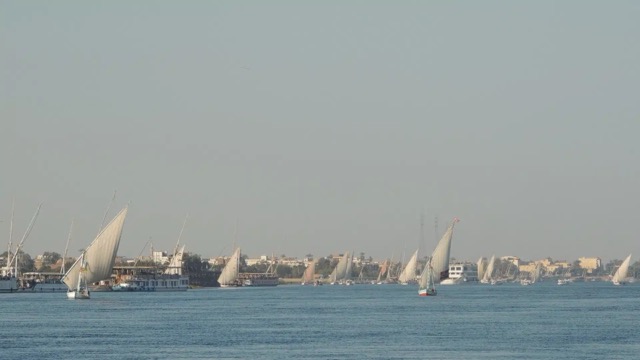
Egypt occupies another crucial place in this story. Through the Suez Canal and through the symbolic weight of Cairo, the country became one of the strategic arteries of the region. Whoever wished to influence the political future of the Middle East sooner or later had to engage with Egypt.
During the early 1960s a moment appeared in which the trajectory might have shifted. The administration of John F. Kennedy sought to open a more constructive dialogue with Gamal Abdel Nasser. Their correspondence reveals an effort, cautious but genuine, to stabilize relations between the United States and Egypt.
Cultural cooperation, including the international campaign to rescue the temples of Abu Simbel during the construction of the Aswan High Dam, became a visible symbol of this tentative rapprochement.
One small episode captures the atmosphere of that moment. During a telephone conversation confirming that the American financial contribution for the preservation of Abu Simbel and the Nubian temples was on its way, Kennedy asked Nasser with characteristic courtesy whether there was anything further the United States could do. Nasser replied that more than two hundred Egyptian postgraduate students were then studying in Soviet universities and expressed his wish to redirect them toward American institutions. Kennedy’s response was immediate: it would be arranged. In practice, this simple exchange opened an additional channel of communication between Egypt and the United States, suggesting that both leaders were willing—each for their own strategic reasons—to explore a gradual rapprochement.
Moments like this rarely dominate history books, yet they sometimes signal political possibilities. The assassination of Kennedy in November 1963 abruptly closed that chapter before it could develop further. Whether that opening might have produced a different strategic relationship between Washington and Cairo remains one of those questions history leaves unanswered.
Another moment in the region’s history that invites reflection concerns Saudi Arabia under King Faisal.
Faisal emerged during the 1960s and early 1970s as one of the most influential leaders in the Arab and Islamic world. His reign combined traditional legitimacy with a cautious program of modernization. He promoted education as a central pillar of national development, including the expansion of schooling for women at a time when this remained a highly sensitive issue in Saudi society. Faisal repeatedly argued that the advancement of the country required the education of all its citizens, men and women alike.
Although deeply rooted in Islamic tradition, his political vision was not centered on religious radicalization but on strengthening state institutions, developing the economy and positioning Saudi Arabia as a stabilizing actor in a region increasingly shaped by ideological rivalries and superpower competition.
Faisal also understood the strategic weight that oil had begun to carry in global politics. During the oil crisis of 1973 he demonstrated that the energy resources of the region could influence international power balances, forcing major Western governments to reconsider their policies toward the Middle East.
His assassination in March 1975 abruptly ended that period of leadership. Like other turning points in the modern history of the region, it left behind an open question. No one can know how Saudi Arabia—and perhaps the wider Middle East—might have evolved under a longer reign of Faisal.
History often advances through such interruptions. Leaders disappear, circumstances change, and the trajectory of entire regions shifts in ways that later generations can only attempt to reconstruct.
The Long Normalisation of Crisis
By the final decades of the twentieth century, something more insidious than open war had settled across the region. Conflict itself had become a permanent political climate. Not always a declared war, not always a clear peace, but a continuous state of tension in which instability functioned almost as a governing condition.
External powers alternated between protection and pressure. Alliances were offered, withdrawn and rebuilt according to strategic necessity. The Middle East increasingly ceased to be treated as a community of societies and became instead a corridor of geopolitical importance—valued for its energy resources, its trade routes and its military position.
Within this environment many governments learned to survive less through civic legitimacy than through the logic of security. Stability was defined not by the well-being of citizens but by the capacity of the state to control disorder. The language of emergency slowly replaced the language of politics.
At the same time the circulation of weapons and the economics of conflict became intertwined with regional power structures. Wars began to appear less as exceptional ruptures than as recurring episodes in a system already prepared for them.
During the decades from the 1980s onward, many of the region’s conflicts increasingly revolved around the same strategic axis: the preservation of regional power balances connected to Israel’s security and the broader geopolitical interests of the United States. The consequences of this strategic logic have been immense. Entire societies have been destabilized, millions of lives broken or displaced, and generations forced to grow up inside cycles of conflict that they did not choose and cannot control.
In recent years another troubling dimension has become visible. Political leadership at the highest levels can sometimes be shaped not only by national strategy but also by intensely personal calculations. When leaders carry heavy political or legal pressures around their own future, the boundary between public policy and private survival can become dangerously blurred. In such circumstances the escalation of conflict may serve purposes far removed from the well-being of ordinary citizens.
For ordinary people the result is a strange historical condition: life unfolding inside a prolonged horizon of uncertainty. Not quite war, not quite peace, but an atmosphere in which the possibility of violence never entirely disappears.
In such an environment entire generations grow up with the sensation that crisis is the natural order of things. Yet historically it is not natural at all. It is constructed—slowly, layer by layer—by political decisions taken far above the lives of those who must live with their consequences.
Power, Responsibility and the Weight of History
History is ultimately made by human beings. Institutions matter, but the character of those who hold power matters as well. Judgment, restraint and the capacity to think beyond personal ambition can determine whether societies move toward stability or toward catastrophe.
The Qur’an reminds believers that when a person dies nothing material accompanies them. Wealth does not cross the threshold of death. Power does not follow into the grave. What remains are the actions one has taken in life.
This moral reflection is not unique to one tradition. In Christianity the Gospel asks what it profits a person to gain the whole world if they lose their soul. In the Jewish Torah the emphasis repeatedly returns to justice and responsibility before God for the deeds of one’s life. Even in the ancient Roman world, long before the rise of the monotheistic religions, a similar idea existed in the concept of fama: what ultimately survives of a person is the memory of their actions and the reputation they leave behind.
Across cultures and centuries the conclusion is strikingly similar. Empires rise and fall, borders shift and political systems disappear. What endures are the consequences of human decisions.
Baghdad remembers what once existed. Egypt continues to feel the weight of its strategic position. And the world now lives inside the long shadow cast by choices made at the highest levels of power.