
The Trial of Spain’s Fiscal General del Estado and the Rule of Law
1. Preliminary Considerations
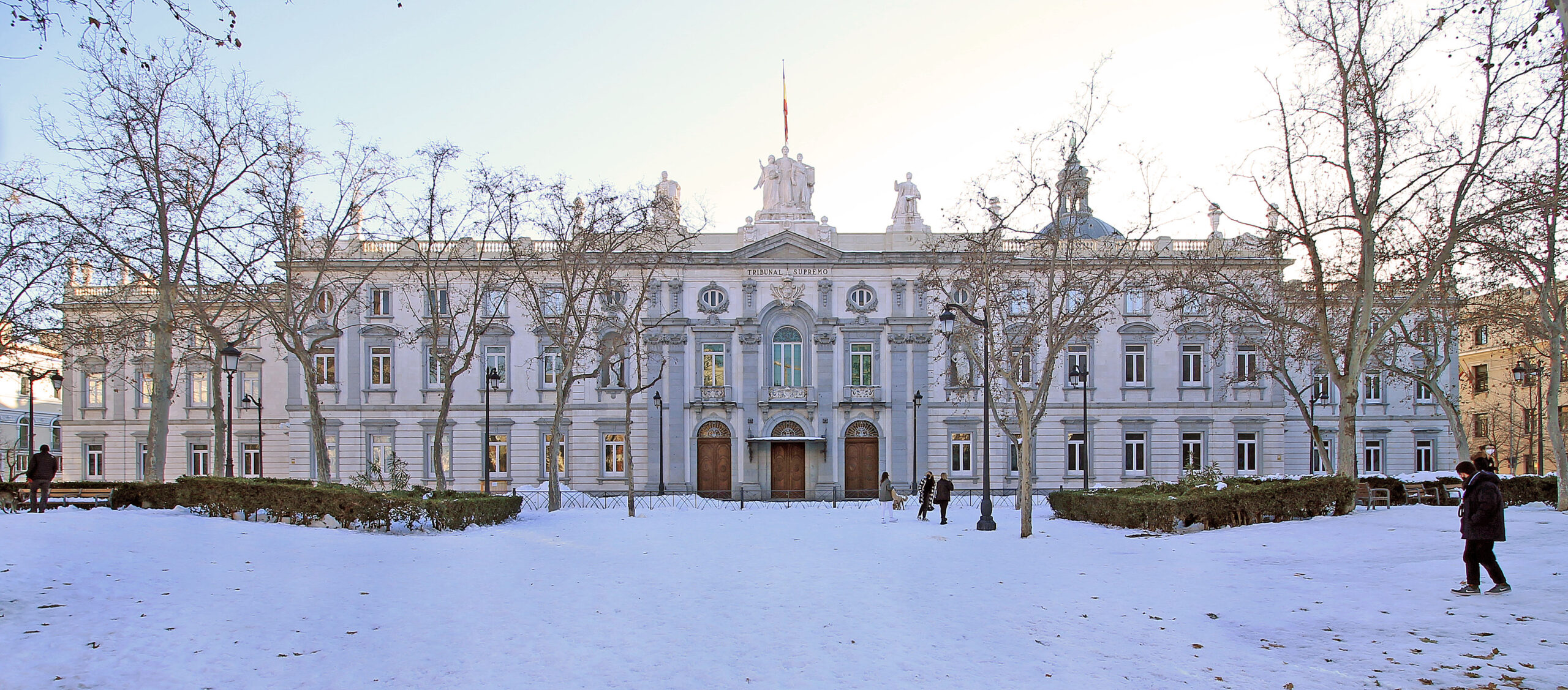
The decision by the Spanish Supreme Court to bring the State Attorney General, Álvaro García Ortiz, to trial for alleged disclosure of confidential information represents an event without precedent in Spain’s democratic period. This case touches the foundations of criminal procedure and institutional legitimacy. It invites reflection on the evidentiary threshold required to open a hearing, and on the consequences for the credibility of the judicial power when that threshold is disregarded.
This case challenges the boundaries of #RuleOfLaw, #JudicialIndependence, and the credibility of the #SpanishJudiciary.
2. Comparative Criminal-Procedure Framework: Thresholds for Opening a Hearing
In many jurisdictions, the initiation of a criminal prosecution and, in many cases, the scheduling of an oral hearing rest on a standard less stringent than proof beyond reasonable doubt. Instead:
-
In common-law jurisdictions such as the United Kingdom and the United States, pre-trial steps require probable cause, reasonable grounds to suspect, or the existence of a prima facie case, depending on context.
-
In civil-law systems, including Spain, there is often a standard of indicios racionales de criminalidad — rational indicia of criminality — or a “sufficient basis for investigation or hearing,” rather than proof of guilt.
-
The essential concept is that opening a trial is not the same as convicting. It is the forum in which proof will be tested. The prosecuting authority must show enough credible evidence or indicia to justify putting the accused before a court, but need not at that stage present full proof of guilt.
A critical point follows from these principles. If a court opens a hearing with no credible evidence at all, procedural safeguards — the presumption of innocence, fairness of trial, and equality of arms — are undermined. Legal scholars warn that when hearings are launched on mere suspicion without serious indicia, the risks are grave: prosecutorial overreach, irreparable damage to reputation, and erosion of judicial independence.
Thus:
-
Preliminary threshold: credible indicia or rational grounds, though not necessarily proof.
-
Trial phase: full evidentiary testing, defendant’s rights, and conviction only if guilt is proven beyond the applicable standard.
-
Institutional risk: if the opening threshold is so low that the process appears unjustified, the very institution of justice suffers.
To open a hearing in the absence of such indicia contradicts both civil-law and common-law principles. The judiciary is not permitted to proceed on conjecture. When a court decides to expose a public official to public trial without concrete factual support, it violates the presumption of innocence and erodes its own authority.
3. The Case against the Fiscal General del Estado
3.1 Facts in brief
The accusation concerns an alleged leak of an internal email in a tax-fraud investigation related to the partner of a regional leader in Madrid. According to Reuters and other international outlets, the Supreme Court accepted the case after the investigating judge found “indications of a crime of disclosure of secrets” and summoned about forty witnesses to testify.¹ The Associated Press reports that García Ortiz denies the charges and that the case is politically explosive.²
To help an international reader understand the position under scrutiny: the Spanish State Attorney General (Fiscal General del Estado) heads the Ministerio Fiscal, which is independent but acts within the judiciary. The nearest equivalents abroad are the Director of Public Prosecutions (DPP) in the United Kingdom, the Procureur général in France, the Generalbundesanwalt beim Bundesgerichtshof in Germany, and the Attorney General of the United States. Each represents the apex of public prosecution in its respective system, responsible for ensuring legality and protecting the public interest. The trial of such a figure in Spain therefore touches the institutional core of justice itself.
3.2 Evidence and critical commentary
Spanish commentary reveals a far more critical tone regarding the evidential basis. An editorial in El País declared that the Guardia Civil found nothing relevant on the seized devices and that the judicial order appeared grotesque and partial.³ An analysis in elDiario.es concluded that the evidence gathered was “extremely fragile and indirect, based mainly on conjecture with little or no objective support,” and that the Supreme Court had “crushed the evidentiary threshold” required to open such a trial.⁴ The Abogacía del Estado, the State Legal Service, accused the investigating judge of omitting exculpatory material and building the accusation upon “mere opinions lacking any probative basis.”⁵
3.3 The contradictions exposed during the hearing
During the first three days of the hearing, the contradictions in the prosecution’s case became strikingly evident. The principal complainant, Miguel Ángel Rodríguez, press chief and right-hand man of the regional president, admitted under oath that his accusations had been founded on falsehoods. Even more decisive was the testimony of the person allegedly harmed by the disclosure — the partner of the regional president — who stated before the court that the email at the centre of the entire procedure had been given by him personally to Rodríguez, with full authorisation for its use by the press.
At that point, the logical and legal consequence should have been immediate. If the data subject himself authorised its transmission to the media, the essential element of the alleged offence disappears. There can be no unlawful disclosure when the owner of the data has voluntarily and knowingly consented to its publication. The maxim nullum crimen sine materia delicti applies in its purest form: without a prohibited act causing unlawful harm, there can be no crime and therefore no trial. By continuing the hearing despite that revelation, the Supreme Court risks transforming the solemn act of justice into an exercise of institutional self-contradiction.

4. Institutional Consequences
The trial of a sitting Attorney General is not only a personal matter; it tests the credibility of Spain’s highest court. Over the last decade the Supreme Court has faced repeated criticism for politicisation and careerist factionalism. By authorising and maintaining a trial that its own State Legal Service deems unsupported by evidence, the Court exposes itself to charges of arbitrariness.
The immediate risk is reputational. Every witness who testifies under these conditions, every international report that repeats the phrase “unprecedented trial,” deepens the perception that the Court acts under political motivation rather than legal necessity. The broader risk is constitutional: when the Supreme Court ceases to appear impartial, the balance among the powers of the State is destabilised.
Spain’s judicial prestige within Europe depends on strict adherence to legal standards of evidence and due process. A deviation of this magnitude cannot remain without consequence. The metaphor of the puntilla — the final stroke that ends a bullfight — aptly captures the possibility of institutional self-harm: the Court, in striking at the Attorney General, strikes at its own heart.
5. Conclusion
Comparative criminal procedure teaches that justice demands a verifiable foundation before a hearing is opened. The Spanish Supreme Court’s own Criminal Chamber has repeatedly held that the judge must refuse both processing and the opening of the oral trial when there are no indicia of criminality, and that prolonging a case without such indicia violates the right to proceedings without undue delay. This doctrine rejects the idea that insufficiency can be deferred to the plenary and affirms that lack of evidentiary basis must terminate the case before trial.⁸
The record described by Spain’s State Legal Service reveals an absence of substantive proof and an excess of conjecture. The testimony delivered in court has now eliminated even the appearance of incrimination. The supposed victim admitted that the disputed material was voluntarily handed to the press. The principal accuser confessed that his allegations were built on a lie. At that moment, the court should have declared the matter closed under the very standard set by the Supreme Court itself, which requires denial of the opening of the oral trial in the absence of indicia of criminality and forbids burdening the accused with a plenary trial when exonerating grounds are already evident.⁹
Continuing a criminal trial once the factual basis has vanished transforms justice into theatre and places the judiciary in contempt of its own law. The process now unfolding risks inflicting irreparable damage not on the person of the Attorney General alone but on the moral authority of the Supreme Court itself.
A judiciary that abandons evidentiary rigor to pursue political or internal ambitions commits an act of institutional suicide. The present trial is not a triumph of accountability but a gesture of despair — the moment in which a great institution, once guardian of legality, performs its own puntillazo. The rule of law survives only when those who interpret it respect the boundary between suspicion and proof. To cross that line is to pronounce the epitaph of the Court’s independence: Requiescat in pace, Spanish Supreme Court.
Footnotes
-
Reuters – Spain’s top prosecutor to face trial in November over leak accusation, 3 Oct 2025, link
-
AP News – Spain’s top prosecutor stands trial over allegations of leaking confidential information, 3 Nov 2025, link
-
El País – El infame juicio al fiscal general, 4 May 2025, link
-
elDiario.es – In dubio pro juicio contra García Ortiz, 30 Jul 2025, link
-
Huffington Post ES – La Abogacía del Estado acusa al juez del Supremo de omitir pruebas favorables al fiscal general, 3 Nov 2025, link
-
Bloomberg – Spain’s Top Prosecutor to Face Trial Over Political Scandal, 9 Sept 2025, link
-
Huffington Post ES – La Abogacía del Estado denuncia una causa inquisitiva contra el fiscal general para declararle culpable, 3 Nov 2025, link
-
Supreme Court, Criminal Chamber, STS 509/2022, 25 May 2022: “Si el Instructor aprecia la existencia de una causa de justificación, razones que pueden llevar a la inculpabilidad o una excusa absolutoria, deberá denegar el procesamiento o la apertura del juicio oral por no existir indicios de criminalidad.”
-
Supreme Court, Criminal Chamber, STS 509/2022, 25 May 2022; see also STS 202/2018, 25 April 2018: “Alargar un proceso de forma innecesaria es dilación no debida,” linking early termination to the right to a process without undue delay. Supported by Constitutional Court, BOE-A-2023-24494, holding that proceedings must be closed when instruction fails to gather even indiciary elements of proof.

