
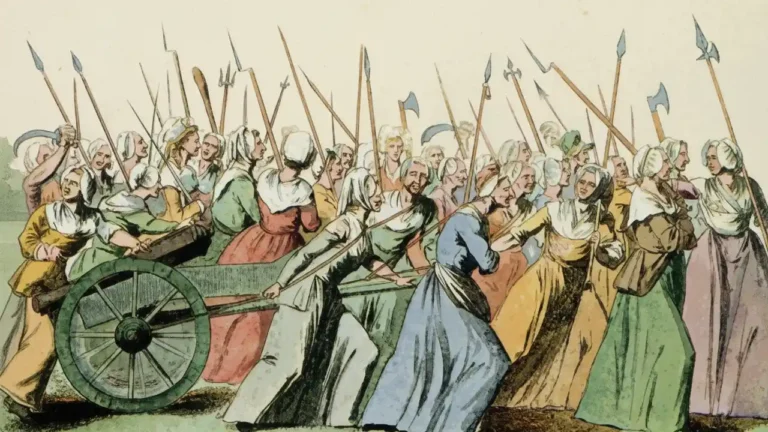
Women Labeled Difficult for Assertiveness and Independence
In a world that publicly celebrates equality and empowerment, a persistent paradox remains. Women who are assertive, independent, and unwilling to conform are still frequently labeled “difficult”. Despite decades of social progress, the stigma attached to female autonomy continues to surface whenever women express firm opinions, challenge expectations, or refuse prescribed roles.
Why does assertiveness in women still provoke discomfort? Why is independence so often reframed as a flaw rather than a strength? This analysis explores the historical roots of this label, the cultural mechanisms that sustain it, and the structural cost of maintaining such a narrative.

Historical Roots of Female Obedience and Compliance
To understand why women are still branded as “difficult”, one must examine the historical construction of female obedience. For centuries, social, legal, and religious systems positioned women as compliant, agreeable, and subordinate. A “good” woman was expected to accept her assigned role, preserve harmony, and avoid challenging authority.
Across cultures, women were defined primarily as caregivers and stabilizers of family and society. Silence, patience, and self-effacement were treated as virtues. Any deviation from these expectations—questioning decisions, expressing dissent, prioritizing personal ambition—was perceived as disruptive.
Within this framework, the label “difficult” functioned as a disciplinary tool. It marked women who refused to internalize submission and framed resistance as a character defect rather than a rational response to inequality.
Challenging the Label of “Difficult”
Although legal and social advances have expanded women’s rights, the expectation of compliance has not disappeared—it has merely become more subtle. Today, women are educated, financially independent, and professionally visible, yet the old reflexes remain. When women assert boundaries or autonomy, the same label resurfaces.
The term “difficult” is not neutral. It is a delegitimizing label used to erode authority and credibility. What it truly signals is not behavioral excess, but nonconformity. A woman is called “difficult” not because she is unreasonable, but because she refuses to behave as expected.
This framing transforms strength into deviance. It encourages self-censorship and reinforces the idea that female legitimacy depends on compliance rather than competence.
Why Assertive Women Are Perceived Differently
A Persistent Gender Double Standard
Assertiveness is interpreted through a gendered lens. Men who display confidence, decisiveness, and resistance are often praised as leaders. Women who exhibit identical traits are labeled as aggressive, uncooperative, or problematic.
This double standard is deeply embedded in social norms. Authority and autonomy are coded as masculine traits, while accommodation and emotional labor are expected from women. When women cross this invisible boundary, their behavior is judged not on merit but on deviation from gender expectations.
Professional Environments and Power Dynamics
The bias is particularly visible in professional contexts. Women in leadership roles are scrutinized more harshly and granted less margin for dissent. A woman who challenges a decision risks being labeled “hard to work with”, while a man doing the same is often perceived as strategic or visionary.
The label “difficult” thus operates as a mechanism of control, discouraging women from exercising authority and reinforcing unequal power structures.
Reframing What Society Calls “Difficult”
The traits most often criticized in women—decisiveness, independence, intellectual rigor, and resistance to pressure—are precisely those required for leadership, innovation, and progress. Labeling these qualities as problematic reflects a failure of perception, not a flaw in character.
Reframing the narrative means recognizing that discomfort with assertive women stems from entrenched norms, not from women’s behavior. Strength does not require apology. Independence is not aggression. Disagreement is not hostility.
A society that penalizes women for autonomy ultimately undermines its own capacity for growth.
Fear of Nonconformity and Social Control
At the core of the “difficult” label lies fear—fear of individuals who refuse predefined roles. When women prioritize careers over traditional expectations, choose unconventional lives, or challenge institutional authority, they expose the fragility of established norms.
Nonconformity forces a collective reckoning. It invites uncomfortable questions about fairness, power, and outdated standards. Labeling women as “difficult” becomes a way to avoid that confrontation.
Yet progress has always depended on those willing to disrupt comfort. Nonconformity is not a threat; it is a catalyst.
The Cost of Conforming
Conformity exacts a high price. When women suppress their voices to avoid criticism, they sacrifice authenticity and potential. The loss is not merely personal. It is structural.
Silenced perspectives mean lost innovation, reduced diversity of thought, and weakened social resilience. A society that discourages women from speaking freely impoverishes itself.
Allowing the “difficult” label to persist sustains a culture where conformity is rewarded over integrity and silence over contribution.
Redefining Strength and Leadership
The path forward requires a recalibration of values. Strength in women must be understood as competence, clarity, and courage—not as deviation. Assertiveness must be recognized as a leadership quality rather than a liability.
Empowering women to speak, decide, and dissent without penalty strengthens institutions and communities alike. Equality is not achieved by encouraging women to adapt to restrictive norms, but by dismantling the norms themselves.
Final Reflections on Women, Power, and Voice
Women are often labeled “difficult” simply for having opinions or refusing to comply with expectations imposed upon them. This label, rooted in historical and cultural bias, continues to limit female autonomy and distort perceptions of leadership.
Challenging this narrative is not a matter of rhetoric but of justice. Assertive and independent women are not obstacles to progress—they are its drivers. Recognizing their voices as legitimate is essential to building a society grounded in equality, intellectual honesty, and shared responsibility.
This does not imply adopting aggressive or competitive behaviors modeled on masculine hierarchies. Female strength does not require imitation. It requires recognition.
When women are free to define authority on their own terms, the result is not disorder, but a more balanced and humane distribution of power.
i

